How to Clean Bathroom Tiles
This article was first published on: January 16, 2026 by Jon Pearce
Last updated: July 8, 2026
This article was first published on: January 16, 2026 by Jon Pearce
Last updated: July 8, 2026
Do you want to transform the look and feel of your bathroom?
Learning how to clean bathroom tiles will help protect your walk-in bath or walk-in shower from soap scum, mould, and limescale.
Our complete guide shows you how to clean a variety of different tile types.
You’ll find step-by-step cleaning methods, grout care, and simple maintenance tips for clean bathroom wall tiles and floors.
Read on to learn how to maintain a hygienic, accessible bathroom.
Ceramic tiles are a popular choice for bathroom walls and floors. They’re relatively non-porous, cost-effective, and generally tolerate everyday bathroom tile cleaning products. You can clean them with mild pH-neutral cleaners and light homemade solutions using a soft cloth or sponge.
After you clean ceramic tiles, rinse them with warm water. Don’t use abrasive pads, as they can make them appear dull.
These tiles are denser and less porous than standard ceramic tiles. They’re highly resistant to water and staining, making them ideal for walk-in shower enclosures and walk-in baths. To clean porcelain tiles, you should use gentle detergents and non-scratch materials.
Before you start cleaning, check whether your porcelain tiles are polished, matt, or textured. If you have textured porcelain floor tiles, you might need to use a firmer brush to lift trapped dirt. However, you should still avoid using harsh abrasives.
Marble, limestone, slate, and travertine tiles are more delicate and porous than ceramic or porcelain tiles, so they require a little extra care.
You should avoid using acidic products like vinegar or strong limescale removers, as these can etch and dull natural stone surfaces.
Instead, use a stone-safe, pH-neutral bathroom tile cleaning product, following the manufacturer’s instructions.
Sealed stone tiles may benefit from regular resealing to help them resist stains.
Glass tiles add a bright, reflective finish to feature walls and shower areas. But they also show watermarks and fingerprints easily!
To clean them, use a mild detergent or a glass-safe cleaner, then rinse and buff them with a microfibre cloth to prevent streaking.
Never use abrasive pads or powders on glass tiles, as they can ruin the tiles’ glossy appearance.
Textured or coated non-slip tiles help reduce the risk of bathroom slips, making them ideal for mobility bathrooms.
However, their textured surface can trap more soap scum and grime than other tile types.
To clean them, use cleaning products that rinse away and don’t leave a slippery residue underfoot. This is especially important if you have non-slip tiles in areas where you rely on grab rails or shower seats.
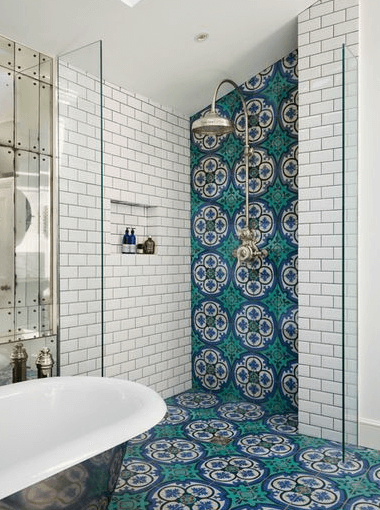
Effective tile cleaning is much easier with the right tools and equipment.
Here’s our shopping list of essential tile cleaning supplies:
Appropriate cleaners for your tile type (i.e. pH-neutral cleaners for everyday jobs and stone-safe products for natural stone tiled)
Dirty tiles can make even a newly refurbished bathroom or wet room feel tired.
Clear the area by removing toiletries, mats, and accessories.
Get rid of any loose dust, hair and debris. To clean bathroom floor tiles, sweep or vacuum them (don’t forget the corners and around shower trays) and wipe down the wall tiles with a damp cloth to remove any powdery residue.
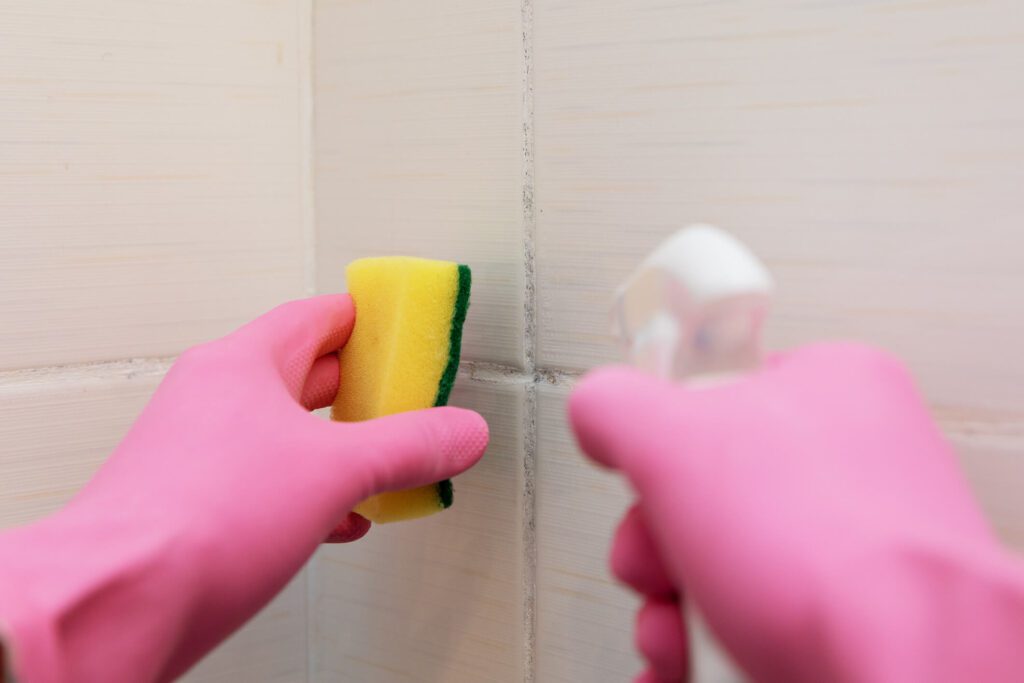
Apply your chosen cleaning product according to the instructions on the bottle.
Let the product sit and work for a few minutes, as this will give it time to soften soap scrum and grime.
To remove grout stains, use a grout brush or an old toothbrush with your cleaning spray, or make a gentle homemade paste using bicarbonate of soda and water.
Work in small sections, scrubbing just enough to remove stains without damaging the actual grout.
Use a soft sponge or a non-scratch pad on glazed surfaces, and a brush for textured or non-slip tiles. Scrub the tiles in a circular motion.
If you need to clean tiles high up in your walk-in shower, use a long-handled tool to reach them without overstretching.
Once you’ve finished, rinse everything with clean, warm water. Using a detachable shower head on wall tiles makes this much easier.
On floors, you can use a clean mop. Dry the tiles and grout lines with a microfibre cloth to prevent water spots, streaks, and mould growth.
One of the most popular tile cleaning hacks for refreshing grout without harsh chemicals is to use a paste made from bicarbonate of soda and a little water. Apply it to grout lines with a brush to lift stubborn dirt. Leave it to sit for a few minutes, then scrub it gently, rinse it, and dry off the area with a microfibre cloth to reveal cleaner grout lines.
If the grout lines in your bathroom are very dirty or mould has taken hold, you might need something stronger. When using specialist grout cleaners, you must follow the instructions on the label, ventilate the room, and apply the product to a small test area first.
After using the treatment, you may wish to seal the grout to help it stay cleaner for longer.
Steam cleaning can penetrate grout lines and loosen dirt without the need for harsh chemicals. It’s especially useful in large bathrooms with lots of grout lines to clean.
Move the steam nozzle slowly along grout lines, wiping away any loosened dirt with a soft, clean cloth.
If you live in a hard water area, you might see chalky white deposits on tiles, shower heads, taps, and along the top edge of baths and shower trays. Regular wiping and drying after showers helps prevent heavy build-up.
To remove limescale from tiles safely, use a limescale remover that’s suitable for your tiles or a mild, non-acidic solution for delicate or stone tiles. Always rinse the product away afterwards.
Soap scum forms a dull film that causes a cloudy appearance and makes bathroom surfaces slippery.
Mild degreasers or a mix of gentle detergent and warm water help break down soap residue on wall and floor tiles. Regular weekly cleaning stops soap scum from hardening and becoming more difficult to remove.
Mould and mildew appear as dark or discoloured patches, often in grout lines or around silicone joints where moisture tends to linger.
To remove mould and mildew, use a mould remover spray or multipurpose cleaner recommended for bathroom use. Before you start, ensure the room is ventilated. After rinsing the product away, remember to dry the area.
To prevent mould and mildew, keep tiles and joints as dry as possible between baths or showers.
In addition to limescale, hard water can leave hazy marks or rings where water droplets dry on tile surfaces. You might notice hard water stains on glass and glossy ceramic tiles.
Regularly drying tiles and glass with a microfibre cloth or using a squeegee can help to prevent these marks from forming. If stains appear, use a non-abrasive cleaning product and buff the area to restore its shine.
After every shower or bath, rinse and wipe down the most exposed tiles, especially in walk-in showers and around walk-in baths, removing any soap or water droplets.
Aim for a more thorough clean once a week, following a shorter version of the step-by-step process outlined above.
This includes removing surface dirt, cleaning bathroom wall tiles and floors with a mild cleaner, and refreshing grout lines.
Keeping your bathroom ventilated with an extractor fan or by opening a window will help tiles dry faster and lower humidity.
Storing bottles and accessories on easy-clean shelves rather than ledges also reduces hidden grime build-up.
If you’re planning to install or renovate an accessible bathroom, consider low-maintenance choices such as larger-format tiles with fewer grout lines, high-quality non-slip surfaces, and well-positioned grab rails that do not trap water.
Our walk-in baths and walk-in showers pair safety with easy-clean features that reduce the effort required to keep tiles looking fresh.
Acidic products, including vinegar-based homemade solutions, can scratch and permanently mark natural stone tiles like marble and limestone.
Repeatedly soaking grout without allowing it to dry can weaken it and encourage mould growth. Use enough water to rinse cleaning products away, but avoid leaving puddles, especially on horizontal grout lines.
Using very abrasive pads, wire wool, or rough scouring powders can easily scratch glazed and glass tiles, leaving them looking dull. It’s best to stick to soft cloths and non-scratch pads.
Strong cleaning products and polishes can leave a residue that makes floors slippery. Always rinse and dry your tiles, and allow your bathroom floor to dry fully before walking on it. You should also avoid using waxy or oily cleaning products on non-slip tiles.
A: A quick daily wipe of the most used areas of your bathroom and a thorough weekly clean is enough in most homes. However, well-used family or disabled bathrooms may benefit from more frequent cleaning of tiled floors and grout lines.
A: Bleach must be used carefully. You should never use it on natural stone. However, it can help with mould and heavy staining on some ceramic and porcelain tiles and grout. When using bleach for cleaning, remember to follow the instructions, ventilate the room, test a small area first, and rinse the bleach away.
A: A mild solution of warm water and a small amount of gentle detergent works well on many ceramic and porcelain tiles. Some people also use bicarbonate of soda pastes for extra cleaning power. Avoid using acid-based cleaning products on natural stone, and always rinse and dry tiles after cleaning.
A: You can significantly brighten grout by deep cleaning it with a bicarbonate of soda paste or specialist grout cleaner. If staining is permanent or the grout is damaged, regrouting or recolouring is the best long-term solution.
A: Cloudy tiles are usually caused by product residue or hard-water deposits. Using less product, rinsing more thoroughly, and buffing the tiles dry with a microfibre cloth can help to restore a clear, shiny finish.
A: It’s best to use pH-neutral cleaners on non-slip tiles. Avoid waxy or polish-type products that can fill the texture and reduce its slip resistance.