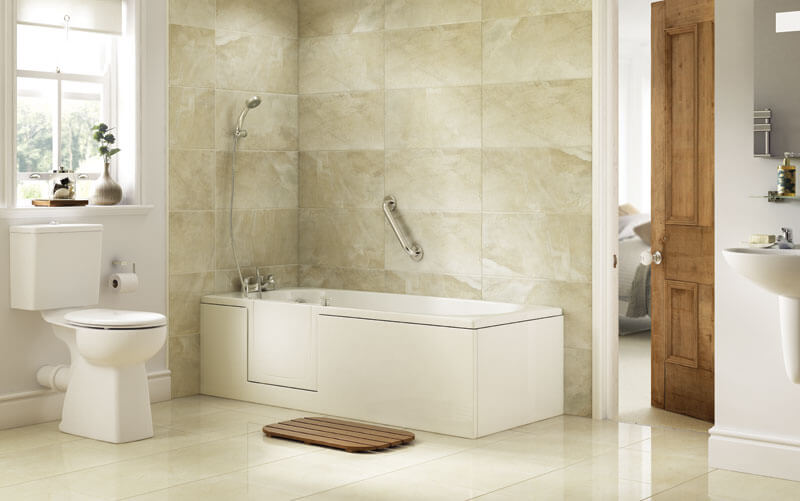
What is a Wet Room & What are the Benefits?
This article was first published on: January 4, 2026 by Mobility Plus Editorial Team
Last updated: June 9, 2026
This article was first published on: January 4, 2026 by Mobility Plus Editorial Team
Last updated: June 9, 2026
Wet rooms offer an attractive combination of clean, contemporary design, practical ease of maintenance, and genuine accessibility that a traditional bathroom simply can’t match.
Whether you’re considering a wet room for aesthetic reasons, for accessibility needs, or just because you want a bathroom that’s easier to live with every day, this guide covers everything you need to know – from how wet rooms work and what they cost to who they’re most suitable for and how to design one that genuinely works for your home.
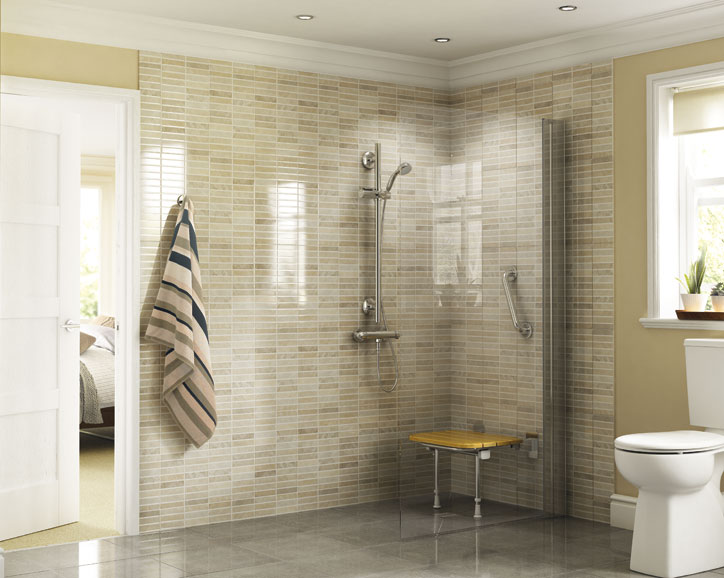
A wet room is a fully waterproofed bathroom in which the shower area is seamlessly integrated into the rest of the floor space, with no tray, enclosure, or step to navigate. The entire room is designed to get wet, with water draining safely through a floor-level drain rather than being contained within a separate shower area.
Unlike a traditional bathroom, where the shower is in a distinct, enclosed zone, a wet room treats the whole space as a single environment. This creates an open, uncluttered aesthetic and removes the physical barriers that can make conventional bathrooms difficult to use for people with limited mobility.
Wet rooms are increasingly popular across a wide range of UK homes, from modern apartments to period properties. They suit many different users, from those drawn to the design possibilities to those who need a more accessible bathing solution.
The functionality of a wet room rests on three key elements:
Waterproofing (tanking) – Before any tiles or finishes are applied, the walls and floor of the room are coated with a specialist waterproof membrane. This tanking system prevents water from penetrating the building structure, protecting against damp and long-term damage. The quality of the tanking is the single most important factor in a wet room installation. It must be done correctly to ensure the room remains watertight for years to come.
Gradient flooring – The floor is laid with a subtle slope toward the drain point, allowing water to flow away naturally and preventing pooling. This gradient is carefully calculated during installation and is invisible once the floor is finished. It doesn’t affect the feel of the room underfoot.
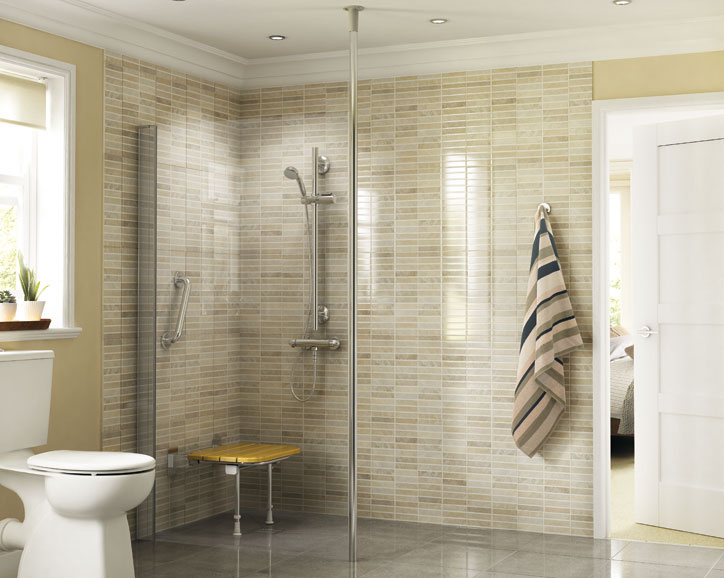
Integration with the rest of the bathroom – The shower area flows seamlessly into the rest of the floor space. A glass screen or panel is often used to manage splash and provide a degree of privacy without creating a physical barrier, though many wet rooms operate with no screen at all.
A well-designed wet room incorporates several defining features:
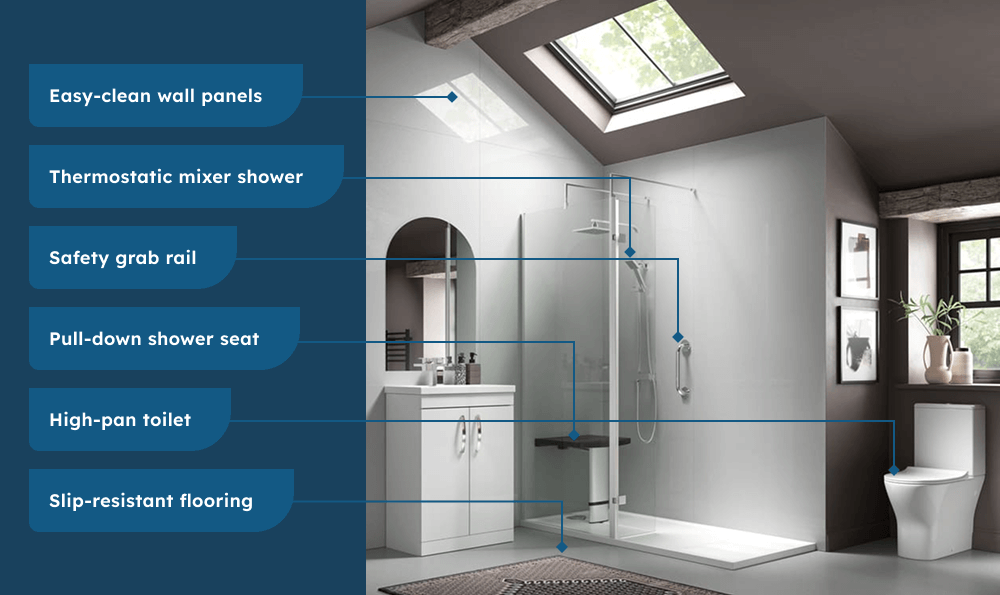
Wet room flooring is one of the most important design decisions in the project. It needs to be slip-resistant, durable, compatible with the drainage gradient, and visually appropriate for the space.
The most common options are:
Ceramic and porcelain tiles – the most widely used choice. Smaller format tiles, including mosaic tiles, conform more easily to the floor gradient and naturally create more grout lines, which improve grip. Large-format tiles can be used effectively but require precise installation to maintain the correct drainage slope.
Natural stone – marble, slate, and limestone offer a premium, distinctive finish. Natural stone requires sealing and slightly more maintenance than ceramic alternatives, but delivers an exceptional aesthetic.
Specialist vinyl – a practical, cost-effective option with good slip resistance and straightforward installation. Suitable for many wet room projects, particularly where budget is a consideration.
Microcement and resin finishes – seamless, contemporary surfaces with no grout lines and a distinctive modern look. These require skilled application but are increasingly popular in luxury wet room designs.
Whatever material you choose, slip resistance is non-negotiable. The Health and Safety Executive provides guidance on slip resistance ratings for flooring in wet environments – a useful reference when specifying materials.
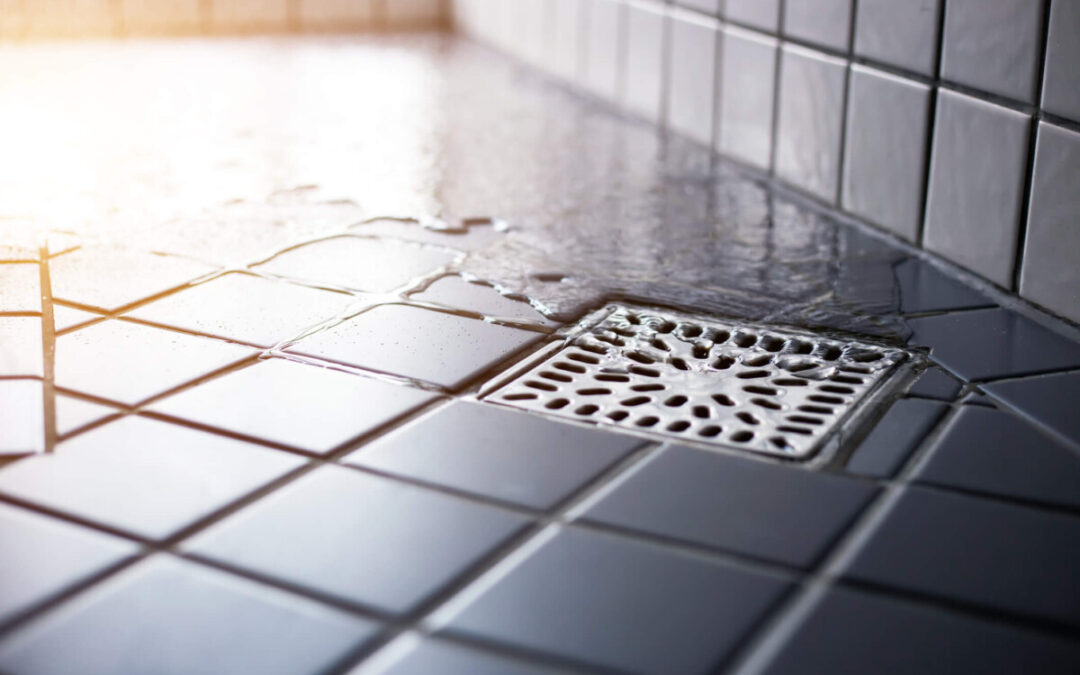
The main benefit of a wet room is the complete removal of physical barriers. There is no step to navigate, no high tray to step over, no narrow enclosure to manoeuvre within. For anyone with mobility challenges, a wet room transforms the bathing experience, but the accessibility benefits are relevant to everyone, at every stage of life.
Without a shower tray, enclosure tracks, or door seals to deteriorate, wet rooms are significantly easier to clean and maintain than traditional shower enclosures. Fewer surfaces mean fewer places for mould, limescale, and grime to accumulate. A wet room designed with easy-clean materials can be maintained with minimal effort.
Wet rooms can make a small bathroom feel considerably larger. Removing the visual bulk of a shower enclosure opens up the space, and the seamless floor-to-wall finish creates a sense of continuity that makes compact rooms feel more generous. A wet room can be an excellent solution for small bathrooms where a traditional enclosure would feel cramped.
A well-designed wet room is visually striking. The clean lines, open space, and seamless finishes create a look that feels genuinely contemporary, and a luxury wet room with premium materials and considered lighting can be a beautiful space. Accessibility and high-end design are entirely compatible.
Quality bathroom upgrades consistently rank among the home improvements most likely to attract buyer interest. A well-installed wet room adds both practical appeal and visual impact – a combination that appeals to a wide range of potential buyers.
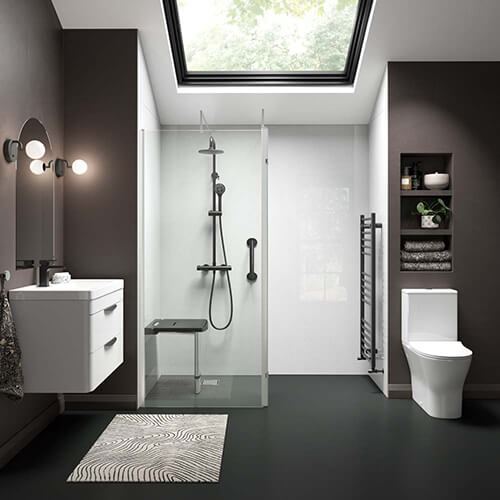
Wet rooms work in both small and large spaces, but they do require some structural consideration, particularly in upstairs bathrooms.
Upstairs installations require assessment of the existing floor structure. The drain needs to be recessed into the floor, which typically means lowering the floor level – work that may involve adjusting or reinforcing joists. This adds complexity and cost compared to a ground-floor installation, but it is entirely achievable with proper planning.
Waterproofing requirements mean that wet rooms are not a project for a general builder. The tanking system must be applied correctly and completely. Partial or inadequate waterproofing will fail. This is why professional installation by a specialist is essential, not optional.
Ventilation is also important. Wet rooms generate significant moisture, and adequate extraction – typically a high-capacity extractor fan – is necessary to prevent condensation and damp elsewhere in the property.
For older adults and people with disabilities, a disabled wet room can be genuinely life-changing. The complete removal of steps and thresholds, combined with the space and flexibility to incorporate accessibility features, makes it the most accessible bathroom format available.
According to the NHS, falls are the leading cause of injury-related hospital admissions in people over 75, and the bathroom is one of the highest-risk rooms in the home. A wet room for elderly users addresses many of the factors that contribute to that risk.
A wet room designed specifically for older adults typically incorporates:
Grab rails – positioned at the shower entry point, alongside any seating, and near the exit. Modern grab rails are available in a range of finishes and can easily be integrated into the design without looking clinical or institutional.
Non-slip wet room flooring – slip-resistant surfaces throughout the room, not just in the shower area, provide consistent safety underfoot regardless of where water travels.
Seating options – fold-down wall-mounted seats or built-in benches allow the shower to be used comfortably from a seated position, reducing fatigue and the risk of slips and falls.
Easy-access controls – thermostatic controls positioned at a reachable height, operable without a strong grip, and set to prevent scalding. Lever or push-button operation is preferable to traditional turn controls for people with reduced dexterity.
A wet room for disabled users and wheelchair users offers the most accessible bathing environment available in a domestic setting.
As part of the design, you should consider:
Wheelchair-friendly layouts – sufficient clear floor space for a wheelchair to move, with a turning circle of at least 1,500 mm as referenced in Part M of the Building Regulations.
Wider access space – generous entry width, with no door or a wide-opening option, allows wheelchair access without difficulty.
Adjustable fixtures – height-adjustable shower heads, fold-down seating, and repositionable grab rails accommodate different users and different needs.
Independence and dignity – the ability to bathe without assistance, or with minimal assistance, has a profound effect on confidence and quality of life. A well-designed wet room for disabled users enables independent personal care.
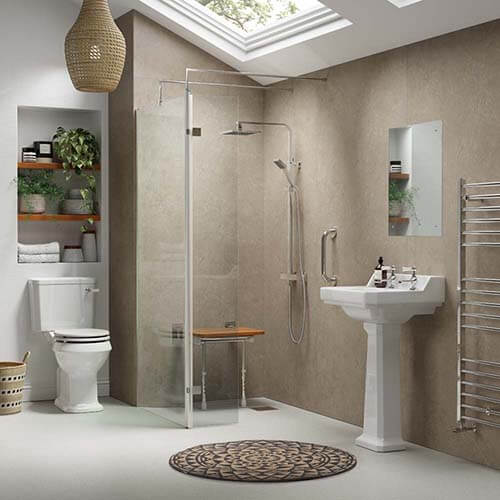
A luxury wet room elevates an accessible wet room into something that is both visually impressive and practical.
Defining features of a luxury wet room include:
Premium materials – large-format porcelain or natural stone tiles, microcement finishes, or bespoke mosaic work. These materials feel considered and distinctive, rather than just functional.
Frameless glass screens – minimal, elegant screening that provides splash control without interrupting the visual flow of the space.
Lighting – recessed ceiling lighting, backlit niches, and carefully positioned task lighting create atmosphere and improve visibility. Good lighting is important for both safety and design.
Contemporary styling – concealed plumbing, brushed metal fixtures, built-in niching for products, and a coherent design language throughout. A luxury wet room feels put together rather than assembled.
Accessibility and luxury are not in competition. The same open space that makes a wet room easier to use also makes it more visually impactful, so the design principles align naturally..
The differences between a wet room and a traditional bathroom include:
Layout and usability: A traditional bathroom places the shower in a separate enclosure, whereas a wet room integrates it into the entire space. The wet room is more open, more flexible, and easier to move around in.
Accessibility: No traditional shower format comes close to matching the accessibility of a level-access wet room. The step-free entry alone makes a huge difference.
Maintenance: Traditional shower enclosures accumulate limescale on doors, mould in tracks, and deteriorating seals. Wet rooms have fewer surfaces and no enclosure, which makes them considerably easier to keep clean.
When a wet room is the better choice: For anyone prioritising accessibility, easy maintenance, or modern design, a wet room almost always represents the better long-term investment. For those who prefer a contained shower and don’t have accessibility requirements, a traditional enclosure may suit them well. However, it is important to think ahead – if you are investing in a new bathroom, ensuring it is appropriate for your needs now and in the future is sensible.
Do wet rooms get water everywhere? A well-designed wet room manages water effectively through gradient flooring and strategic drain positioning. A glass screen or panel further contains splashes in the shower area. In most cases, water stays where it is expected to, and the floor dries quickly after use.
Is wet room flooring slippery? Properly specified wet room flooring is designed to be slip-resistant when wet. The choice of material matters – you should look for flooring with an appropriate slip resistance rating for wet environments. A specialist installer will guide you toward the right options.
Can you have a wet room in a small bathroom? Yes, and a wet room can make a small bathroom feel larger by removing the visual bulk of a shower enclosure. A good wet room design maximises the available space and positions the drain effectively. Are wet rooms suitable for elderly people? Yes, wet rooms are one of the most suitable bathroom formats for older adults. The level-access entry, open space, and ability to incorporate grab rails, seating, and thermostatic controls make them much safer and easier to use than a traditional bathroom.
A wet room suits people at many different life stages and in a variety of homes, from those who want a beautiful, low maintenance bathroom to those who need a safe, accessible space that supports independent living.
If you’re living with reduced mobility, caring for someone who is, or thinking ahead about how your bathroom will work as your needs change, a wet room is a future-proof investment you can make in your home.
If you’re drawn to the clean lines, open space, and luxury wet room potential, the design and accessibility benefits point in exactly the same direction.
Mobility Plus specialises in accessible bathroom design and wet room installation, with the experience to help you find the right solution for your home, your needs, and your budget. Contact us today for a free brochure, and begin your wet room journey.